When people talk about Galileo Galilei, the story is often told as a battle between science and authority. But there is another side to it that feels more human.
Galileo’s real struggle was not simply rejection. It was being misunderstood. Rejection is direct. Someone hears you and disagrees. Misunderstanding is stranger than that. It happens when people cannot fully grasp what you are trying to show them in the first place.
Gathering data
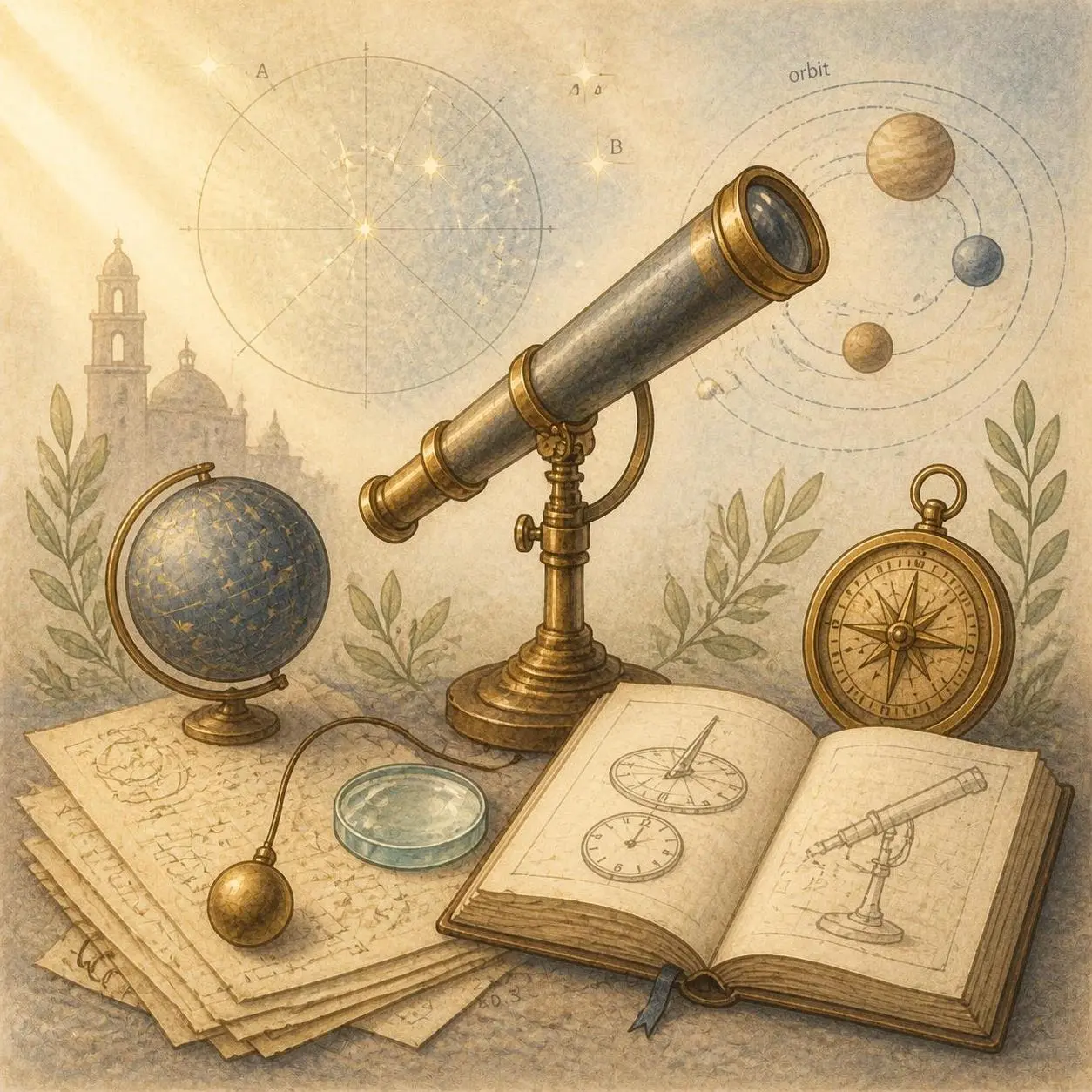
Then Galileo looked through a telescope and noticed details no one had properly seen before. He saw moons orbiting Jupiter. That mattered because it proved not everything revolved around Earth. He observed the changing phases of Venus, which supported the idea that planets orbit the Sun. He saw that the Moon’s surface was rough and imperfect, not smooth and divine as many believed.
These observations were not just new information. They changed the meaning of the universe. But many people around him could not fully appreciate what he was pointing toward. Not because they were unintelligent, but because Galileo’s discoveries demanded a completely different way of thinking.
Sometimes people struggle to understand new ideas because the ideas arrive before society is mentally ready for them.
Imagine trying to explain modern satellites, artificial intelligence, or quantum physics to someone five hundred years ago. The words might make sense individually, but the overall picture would feel impossible to process. That is similar to the gap Galileo faced.
His telescope became more than a scientific instrument. It became a symbol of expanded perception.
Many people in Galileo’s time trusted philosophy and inherited teachings more than observation. Human beings naturally rely on familiar frameworks to make sense of the world. Galileo disrupted those frameworks by saying, in effect: look again.
One of the most fascinating parts of Galileo’s story is that some critics reportedly refused even to look through the telescope. That detail says a lot about human nature. People do not always resist ideas because the evidence is weak. Sometimes they resist because accepting the evidence would force them to reorganize their understanding of reality.
This happens now
Throughout history, breakthroughs often begin as things people cannot fully appreciate at first. Not because they lack value, but because they arrive outside the limits of current imagination.
Galileo teaches us that understanding has its own timing. His ideas were eventually accepted not because he became louder, but because the evidence continued to accumulate. Future scientists built on his observations. Technology improved. The world slowly caught up to what he had already seen.
Modern science depends on people noticing things others overlook. It depends on questioning assumptions that seem permanent. Whether it is physics, medicine, climate research, or space exploration, progress often starts with someone observing reality differently before society fully understands the significance.
Galileo’s relevance today is not just about astronomy but also about the experience of seeing a possibility before others can recognize it. There is something deeply human in that experience. Many people know what it feels like to explain something important and watch others miss the point entirely. Sometimes understanding arrives years later. Sometimes not at all.
The world eventually admired his vision. But during his lifetime, much of the challenge came from living among people who simply could not yet see what he saw.
Takeaways
- Misunderstanding: Galileo's struggles stemmed more from being misunderstood than outright rejection from authority figures.
- Expanded Perception: His discoveries, such as Jupiter's moons and the rough surface of the Moon, challenged existing beliefs and required a shift in societal thinking.
- Timeliness of Understanding: Acceptance of groundbreaking ideas often depends on the readiness of society to comprehend those ideas, highlighting the complexities of human perception and scientific progress.
Reflection questions
- How do societal beliefs and frameworks influence the acceptance of new scientific ideas?
- In what ways do misunderstandings manifest in today's scientific community, and can you identify contemporary examples?
- What role does technology play in supporting or inhibiting the understanding of revolutionary ideas?
- How can we foster a culture that encourages curiosity and openness to new perspectives in the face of established beliefs?